
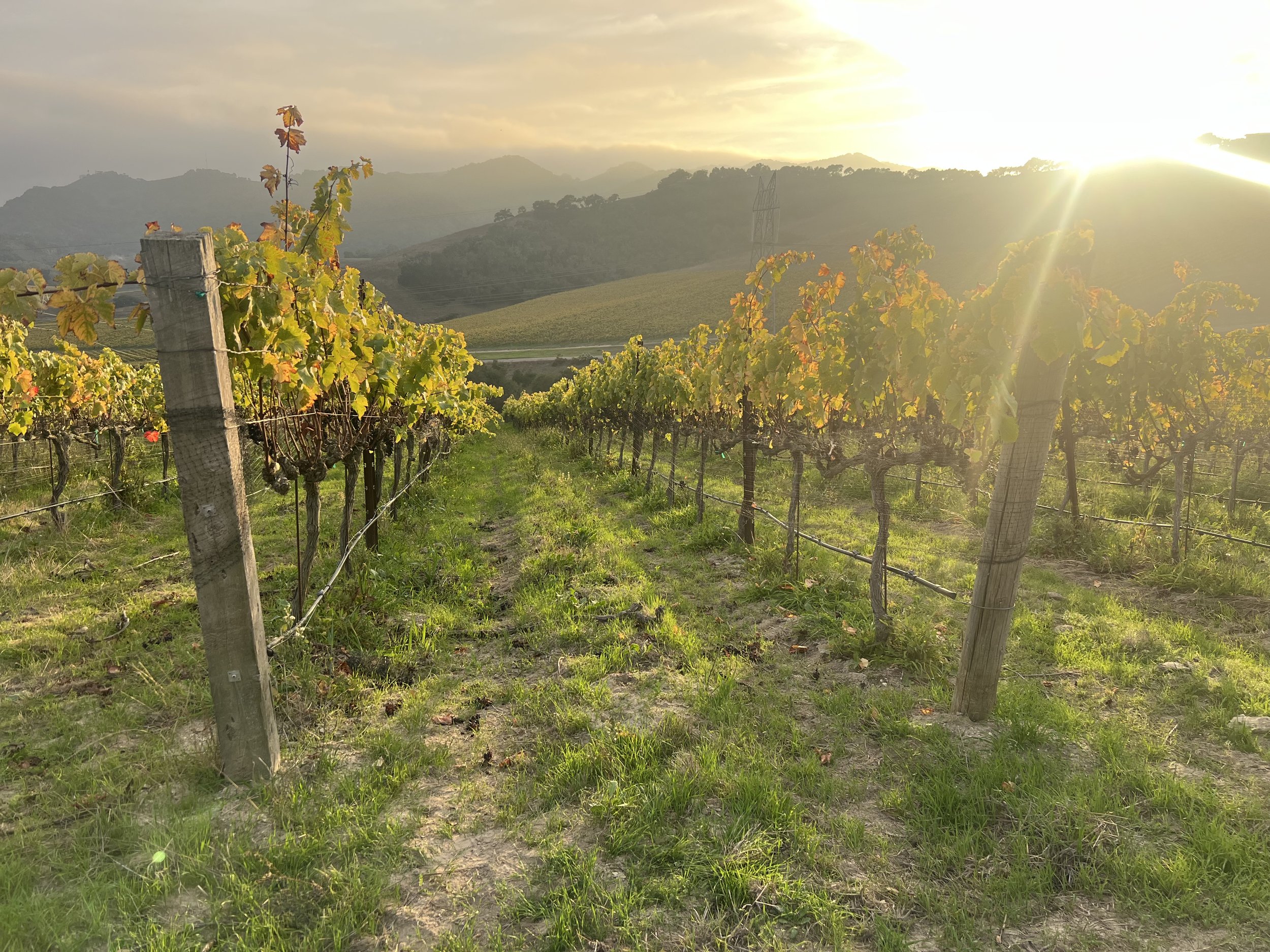
How Weather Shapes a Vintage
Every vintage is a story written by the season. Temperature swings, coastal fog, wind, rainfall, and heat spikes all influence how grapes ripen, how flavors develop, and ultimately how the wine tastes in the glass.
Growing season temperature
Warm seasons accelerate ripening, producing riper fruit, softer tannins, and richer textures. Cooler seasons slow everything down, preserving acidity and giving wines more tension and freshness.
Coastal fog & wind
In SLO and Edna Valley, morning fog and afternoon winds act like natural brakes, extending the growing season and building complexity. Long, slow ripening = layered aromatics and balanced acidity.
Rainfall timing
Winter rain replenishes soil. Spring rain can disrupt flowering. Fall rain can dilute fruit or force early picking. The timing matters more than the total amount.
Heat Spikes
A few days over 100 degrees Fahrenheit can push sugars up quickly, forcing winemakers to pick earlier than planned. Too many spikes can stress vines and reduce yields.
What This means in the Vineyard
Berry size & skin thickness
Warm, dry years produce smaller berries with thicker skins - more color, more tannin, more intensity. Cooler years produce larger berries with softer skins - lighter color, more delicacy.
Acidity & Sugar balance
Weather determines how quickly sugar accumulates and how slowly acidity drops. The best vintages are the ones where these two curves move in harmony.
Flavor development
Herbal to floral to fruity to ripe to jammy. Weather determines how far along that spectrum the grapes travel before harvest.
What This Means in the Cellar
Even the best winemaker can’t '“fix” a vintage - they can only respond to it.
Warm Vintages
Riper fruit
higher alcohol
softer tannins
plush, generous wines
Cool Vintages
Bright acidity
lower alcohol
more structure
elegant, aromatic wines
Variable vintages
patchwork picking decisions
more sorting
more nuanced blending
Why No Two Vintages Taste the Same
Even small weather differences - a foggier June, a hotter September, a late-season rain - create noticeable shifts in the final wine. That’s why vintage charts exist, why collectors care about years, and why winemakers talk about “the personality of the season.”
Vintage variation isn’t a flaw. It’s the soul of wine.